

There is a quiet satisfaction in turning a single ball of natural cotton into a durable, beautifully textured dishcloth that elevates your daily kitchen rituals. If you have been searching for an easy crochet dishcloth pattern that works up in under an hour yet looks like a refined apothecary home accent, this textured cotton washcloth is your perfect quick project. Engineered with raised scrubbing ridges and reinforced edges, this reusable cloth wipes countertops effortlessly and endures hundreds of machine wash cycles.
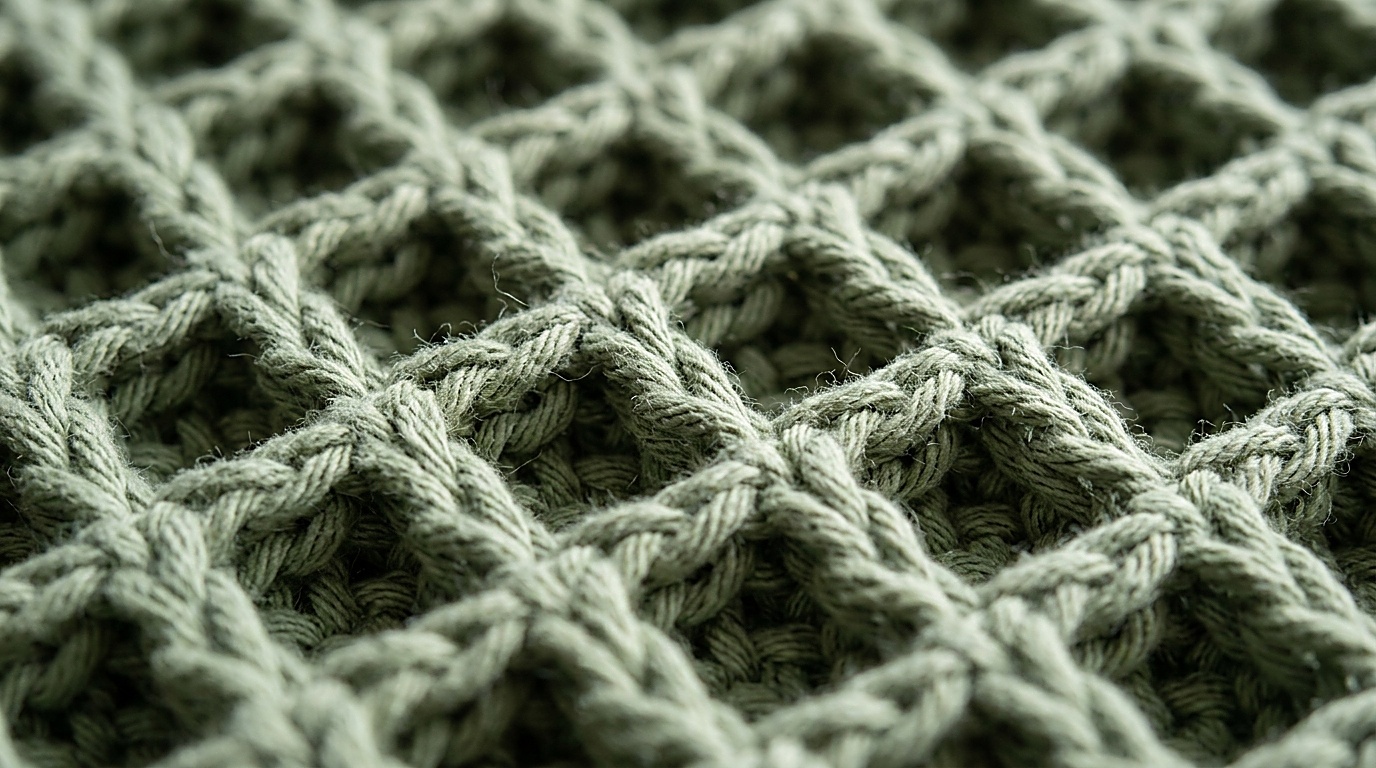
Unlike standard flat single-crochet cloths that become limp and soggy when wet, this design pairs alternating front-post and standard stitches (a miniature version of our full waffle stitch tutorial, or compare with our flat moss stitch guide) to form raised grid pockets. These sculptural cells do not merely provide visual depth; they create gentle scrubbing ridges that trap crumbs, wipe grease, and rinse clean without scratching non-stick cookware or delicate ceramic plates.
Why Unmercerized Cotton Outperforms All Other Kitchen Fibers
Selecting the proper fiber is the defining difference between a dishcloth that lasts years versus one that smells of mildew within days. Check our crochet yarn weight guide for recommended worsted cotton brands:
- Maximum Water Absorbency: Unmercerized “kitchen cotton” (such as Lily Sugar’n Cream or Bernat Handicrafter) retains its natural matte, thirsty surface. It absorbs three times its dry weight in water almost instantly, making it far superior to slick mercerized threads or water-repellent synthetics.
- Heat Resistance: 100% natural cotton can safely handle scalding hot water, hot cast iron skillet handles, and high-temperature sanitizing wash cycles without melting or releasing microplastics.
- Zero Scratches: Soft plant fibers offer enough texture to scrub baked-on oatmeal or dried coffee rings while remaining 100% safe on enameled Dutch ovens and polished marble countertops.

Pattern Specifications & Finished Dimensions
- Yarn: 1 skein (approx. 90 to 95 yards) Category #4 Worsted Weight 100% Cotton.
- Hook: 4.5mm (US 7) hook (downsizing half a millimeter keeps the textured pockets firm and tight).
- Notions: Yarn needle for weaving ends, scissors.
- Finished Dimensions: 8.25″ x 8.25″ (21 x 21 cm) square after border.
- Gauge: 16 sts and 12 rows = 4″ (10 cm) in textured pattern.
Step-by-Step Executable Pattern
Abbreviations (US Terms): ch = chain; sc = single crochet; dc = double crochet; fpdc = front post double crochet; sl st = slip stitch; st(s) = stitch(es).
Foundation Chain: Loosely chain 26 with your 4.5mm hook.
Row 1 (Foundation Base): Work 1 dc into the 3rd chain from your hook (turning chains do not count as a stitch). Work 1 dc into each remaining chain across to the end. Turn. [24 active dc stitches]
Row 2 (Wrong Side / Ridge Setup): Ch 2 (does not count as a stitch), work 1 dc into the first stitch. *Work 1 fpdc around the next stitch, work 1 dc into each of the next 2 stitches.* Repeat from * across until 2 stitches remain, work 1 fpdc around the next stitch, work 1 dc into the final stitch. Turn. [24 active stitches]

Row 3 (Right Side / Grid Completion): Ch 2, work 1 dc into the first stitch. *Work 1 dc into the next stitch, work 1 fpdc around each of the next 2 stitches.* Repeat from * across until 2 stitches remain, work 1 dc into each of the final 2 stitches. Turn. [24 active stitches]
Rows 4 through 17: Repeat Rows 2 and 3 until your dishcloth measures approximately 7.5 inches square, ending on a Row 3. Do not fasten off; proceed directly to the border.
The Reinforced Framing Border & Hanging Loop
Adding a dense single-crochet border locks the row ends and prevents cotton corners from curling inward after repeated washings:
Border Round: Ch 1. Work sc evenly around all four sides of the dishcloth, placing (1 sc, ch 2, 1 sc) into three of the corners. Along the vertical side edges, place approximately 3 sc for every 2 row ends to keep margins completely flat.
Optional Hanging Loop: When you reach the final fourth corner, work 1 sc, chain 12 loosely, and work 1 sc into the same corner space. This creates a sturdy hanging loop so your cloth dries quickly between kitchen uses. Join with a sl st to the first sc, fasten off, and weave all tails securely through the dense border.

Kitchen Hygiene & Odor Prevention
Traditional kitchen sponges are breeding grounds for bacteria because their dense foam traps moisture. Handmade cotton dishcloths dry much faster, but proper sanitizing keeps them smelling fresh for years:
- Rinse & Hang to Dry: Always squeeze out soap suds and hang your dishcloth by its corner loop between uses. Never leave damp cotton crumpled in the bottom of a sink basin.
- Hot Water Sanitizing: Machine wash with your kitchen linens in warm or hot water with regular detergent. Avoid chlorine bleach, which dissolves natural cotton cellulose fibers over time.
- Tumble Dry Regular: Tumble drying on medium or high heat restores the springy texture of the waffle grid cells, fluffing the cotton strands so they are thirsty for the next meal cleanup.
Save This Dishcloth Pattern on Pinterest
Pin this textured cotton dishcloth pattern to your Pinterest crochet kitchen gifts board so you always have this 1-hour stash-buster ready for housewarming presents and weekend crafting!

