The true magic of crochet lies in the geometry of loops. By altering where you insert your hook, how many times you wrap your yarn, and whether you work through the front or back posts, you can transform simple string into dense thermal fabric, airy lace, or sculptural 3D honeycomb ridges. Whether you are starting with our beginner step-by-step guide or designing your first heirloom blanket, having a comprehensive stitch repertoire is the key to creative freedom. In this comprehensive stitch directory, we explore the 7 foundational and textured stitches that every modern maker must have in their toolkit.
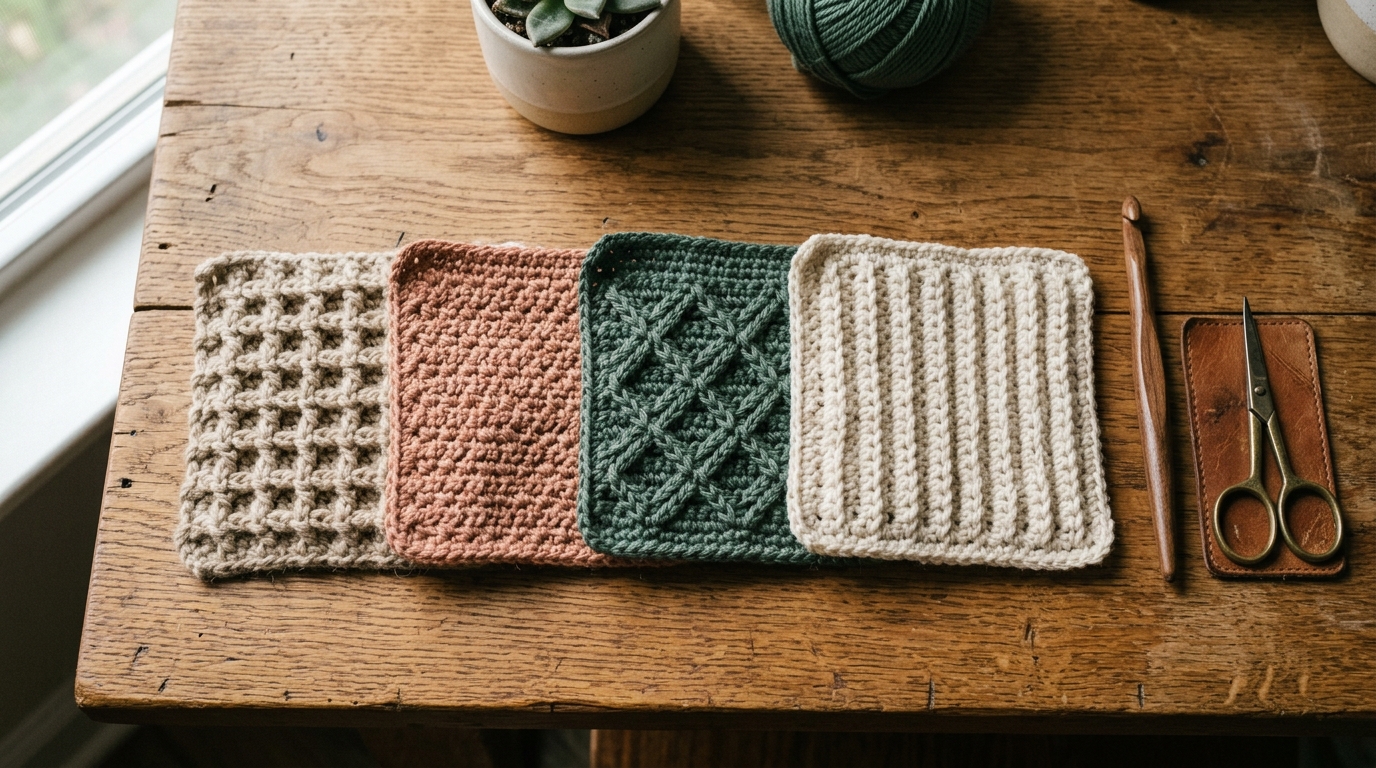
Each stitch pattern creates a unique balance of drape, warmth, yarn consumption, and structural integrity. Understanding these characteristics allows you to choose the exact right stitch for every functional make—from sturdy market totes that never sag to fluid, lightweight summer shawls.
Why Mastering Stitch Diversity Transforms Your Making
- Fabric Customization: Match the physical properties of your fabric (stiff, elastic, breathable, or dense) directly to your project’s everyday demands.
- Yarn Optimization: Choose open, taller stitches (like double crochet) when working with luxury hand-dyed skeins, and dense post stitches when durability is paramount.
- Tactile Richness: Incorporating dimensional textures like waffle and alpine stitches elevates handmade pieces into boutique-quality home accents.
- Pattern Fluency: Understanding the mechanics behind basic stitches allows you to read vintage, international, and charted patterns effortlessly.
The 7 Core Stitches: Anatomy, Drape & Best Uses

1. Single Crochet (SC / UK DC):
The foundation of all crochet. Compact, firm, and structurally dense with minimal holes. It is the gold standard stitch for baskets, amigurumi stuffed toys, durable hot pads, and secure bag bases.
2. Half Double Crochet (HDC / UK HTR):
The favorite stitch of fiber designers. Slightly taller than single crochet, HDC features a unique “third loop” on the back of the stitch. Working into this third loop pushes the top V forward, creating an elegant knitted knit-ribbing effect—the exact technique featured in our easy chunky crochet blanket pattern.
3. Double Crochet (DC / UK TR):
Twice the height of a single crochet, the double crochet works up twice as fast. It produces a soft, fluid drape with gentle stretch, making it the classic choice for granny squares, lightweight cardigans, and expansive throw blankets.
4. Treble Crochet (TR / UK DTR):
A tall, open stitch created by wrapping yarn twice around the hook before inserting. Treble crochets yield an airy, lace-like fabric that breathes beautifully, ideal for summer beach wraps, delicate shawls, and decorative borders.
5. The Moss Stitch (Linen / Granite Stitch):
Worked as a repeating sequence of [1 SC, CH 1], with each stitch worked into the chain space of the previous row. The moss stitch creates an exquisite, woven-look fabric that lies completely flat with zero curling edges (discover more in our crochet blocking and edge finishing guide). An absolute favorite for temperature blankets and scarves.

6. The Textured Waffle Stitch:
Combining regular double crochets with Front Post Double Crochets (FPdc) creates deep recessed square windows reminiscent of a breakfast waffle. This stitch traps air for phenomenal thermal insulation, making it the premier choice for thick winter throws and luxury kitchen washcloths (as seen in our free waffle stitch crochet dishcloth pattern).
7. The Alpine Stitch:
An alternating rhythm of Front Post Treble Crochets worked two rows below, followed by stabilizing rows of single crochet. The resulting fabric features a raised diamond relief pattern with dramatic tactile depth and a dense, windproof structure.
Stitch Comparison & Properties Matrix
| Stitch Pattern | Height Ratio | Yarn Consumption | Flexibility / Drape | Best Application |
|---|---|---|---|---|
| Single Crochet | 1x (Standard) | Low to Moderate | Firm & Rigid | Bags, Baskets, Coasters |
| Half Double | 1.5x | Moderate | Medium Soft | Hats, Sweaters, Pillows |
| Double Crochet | 2x | Low (fast coverage) | High & Fluid | Granny Squares, Throws |
| Moss Stitch | 1x (Interlocking) | Moderate | Flexible & Flat | Scarves, Baby Blankets |
| Waffle Stitch | 1.5x (Dimensional) | High (+30% yarn) | Thick & Plush | Thermal Blankets, Cloths |
| Alpine Stitch | 1.75x (Relief) | High (+35% yarn) | Dense & Textured | Winter Cardigans, Rugs |

Frequently Asked Questions
Which crochet stitch uses the least amount of yarn?
Taller, open stitches like the double crochet and treble crochet use significantly less yarn per square inch than short, dense stitches. Single crochet and post stitches require the most yardage.
What is the best stitch for a warm winter blanket?
The waffle stitch and alpine stitch are unmatched for warmth. Their raised ridges create pocketed air barriers that trap radiant body heat far better than flat stitches.
How do I prevent post stitches from pulling my fabric too tight?
When working a front post stitch (FPdc or FPtr), pull your loop up to the full height of the current row before completing the stitch yarn-overs. This prevents the post stitch from puckering the surrounding fabric.
Pin This Master Stitch Directory
Save this master directory to your crochet stitch board on Pinterest to reference stitch heights, textures, and terminology whenever you plan your next project!

