Crocheting a blanket is a substantial commitment of creative energy, time, and budget. When you invest forty to eighty hours hooking hundreds of rows and purchase multiple skeins of yarn, choosing the right fiber is the single most critical decision you will make. A blanket must not only look inviting draped across your living room armchair; it must also withstand constant lap friction, surviving repeated machine wash cycles without fuzzing into unsightly pilling mats, shedding fine lint, or sagging under its own physical weight. Below, we break down the five most reliable yarn categories for crochet blankets, comparing their fiber mechanics, drape behavior, and laundering longevity.
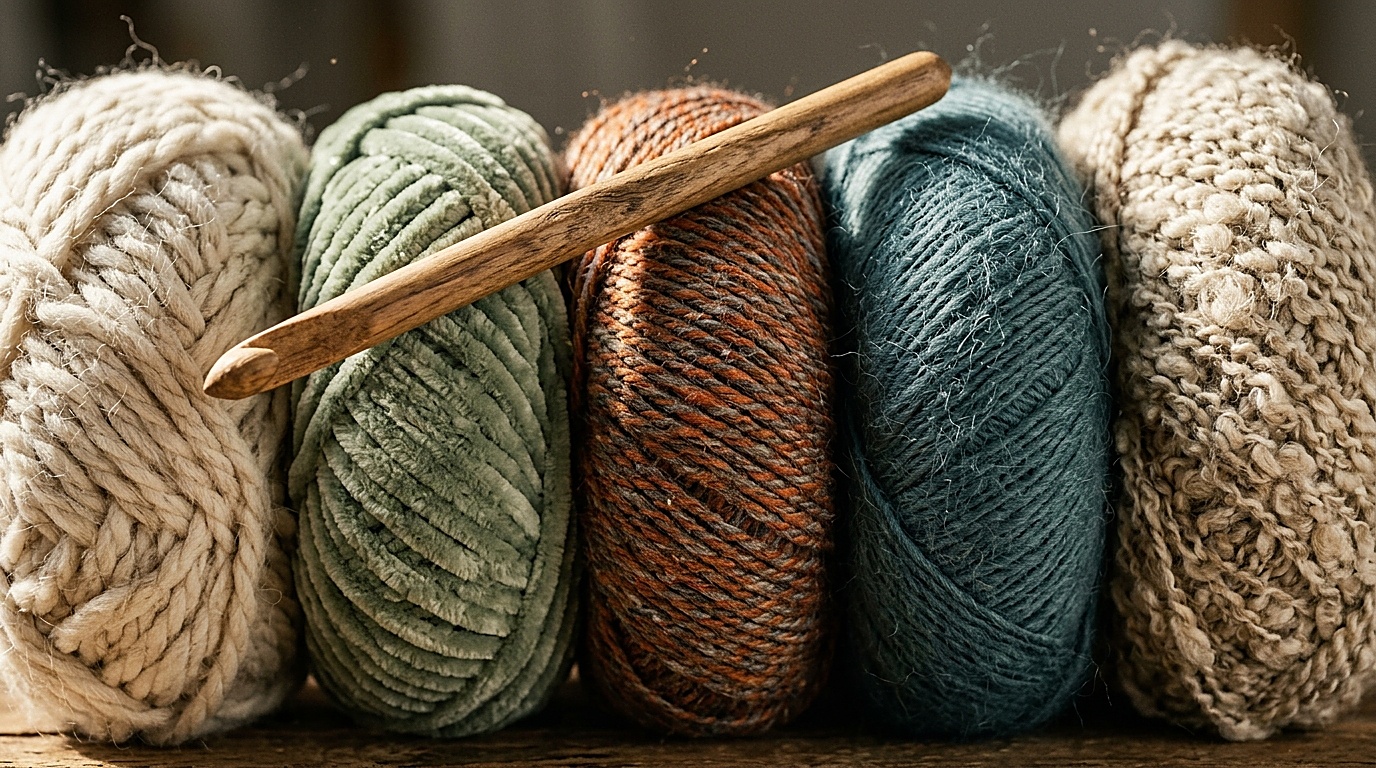
Unlike small accessories like beanies or dishcloths, full-size afghans present unique mechanical challenges (whether you are making a diagonal C2C crochet blanket, a quick chunky ribbed throw, or a delicate baby nursery throw). A throw blanket easily weighs between 1,200 grams and 2,500 grams (2.5 to 5.5 lbs). Over months of use, that weight pulls downward on every stitch. Understanding how different plies, fiber twists, and synthetic blends respond to gravity and friction ensures your finished project remains an heirloom rather than a stretched-out disappointment.
Blanket Fiber Mechanics: Weight, Sag & Friction Resistance
When selecting a blanket yarn, four physical characteristics determine whether it will hold up over years of everyday use. Always verify your gauge with our yarn weight and hook size chart before buying in bulk:
- Ply Twist & Structural Integrity: Yarns with multiple, tightly twisted plies resist surface abrasion far better than single-ply roving. Loosely spun roving yarns look plush in the skein but will pill and fuzz within weeks of sofa friction.
- Tensile Recovery (Elastic Memory): Animal fibers like wool and high-grade acrylics possess natural bounce that springs back into shape after being stretched over a lap. Inelastic fibers like 100% plant cellulose will stretch permanently downward under blanket weight.
- Wash Cycle Tolerance: Everyday family throws require machine washability. If a yarn requires delicate hand-soaking in a bathtub, it will rarely be cleaned, leading to fiber stiffness and trapped dust.
- Thermal Breathability vs. Weight: Thick synthetic chenille traps enormous amounts of body heat quickly, making it ideal for freezing winter nights, whereas cotton blends provide cool, breathable summer weight.
Comparison Matrix: The 5 Top Blanket Yarn Types
| Yarn Category | Standard Weight (CYC) | Primary Fiber | Pilling Resistance | Best Blanket Application |
|---|---|---|---|---|
| 1. Anti-Pilling Acrylic | #4 Worsted | 100% Low-Pill Acrylic | High (Fibers shed cleanly) | Everyday family throws & baby blankets |
| 2. Polyester Chenille | #6 Super Bulky | 100% Micro-Polyester | Moderate (Prone to worming) | Ultra-fast, cozy couch throws & floor mats |
| 3. Washable Wool-Acrylic Blend | #5 Bulky / #6 Super Bulky | 80% Acrylic / 20% Wool | Moderate to High | Heirloom winter afghans & cabin decor |
| 4. Cotton-Bamboo Blend | #3 Light / #4 Worsted | 50% Cotton / 50% Bamboo | Very High (Zero fuzzy pills) | Breathable summer throws & nursery bedding |
| 5. Superwash Merino Wool | #4 Worsted / #5 Bulky | 100% Treated Merino | Moderate (Soft surface) | Luxury heirloom gifts & artisan bedding |

In-Depth Evaluation of the 5 Contenders
1. Premium Anti-Pilling Acrylic (e.g., Lion Brand Pound of Love, Premier Anti-Pilling Worsted):
Modern acrylics bear little resemblance to the scratchy synthetics of past decades. High-grade anti-pilling acrylic fibers are engineered to release surface fuzz naturally during washing cycles without tangling into tight little pills. With substantial yardage per skein, generous color selections, and complete machine-washable reliability, worsted anti-pilling acrylic is the most dependable workhorse fiber for large family throws.
2. Polyester Chenille Blanket Yarn (e.g., Bernat Blanket, Premier Basix Chenille):
Chenille yarn is a favorite for beginners because its super-bulky gauge (#6) allows you to complete an entire lap throw in a single weekend using an 8.0mm or 10.0mm hook. The velvet-like pile is exceptionally soft against bare skin. However, chenille has a known vulnerability called worming—if your crochet tension is too loose, the slick chenille tufts can slip out of the central core thread, creating unsightly dangling loops. Always pair chenille with tight, compact stitches like single crochet or half-double crochet.
3. Wool-Acrylic Blends (e.g., Lion Brand Wool-Ease Thick & Quick):
Blends pairing 20% natural wool with 80% durable acrylic deliver the authentic warmth and bouncy elasticity of animal fleece without the high price tag or strict hand-wash requirements. The wool content adds physical loft and natural thermal insulation, while the acrylic stabilizes the strands against excessive shrinkage.

4. Cotton & Cotton-Bamboo Blends (e.g., Caron Cotton Cakes, Lion Brand 24/7 Cotton):
If you run warm or want a year-round throw that stays fresh in summer, plant fibers are unbeatable. Cotton has zero static electricity, exceptional stitch definition, and does not pill. Note that pure cotton is substantially heavier than acrylic; a large 50″ x 60″ throw can weigh over 4 pounds, creating a soothing, weighted-blanket feel.
5. Superwash Merino Wool:
For luxury heirloom gifts, superwash merino is the gold standard. Chemically treated to remove microscopic fiber scales that cause wool to felt, superwash merino can be washed in cold water without shrinking. It provides silky drape and unmatched thermal warmth, though it represents a much higher monetary investment for an adult-sized afghan.
How to Estimate Yardage & Avoid “Yarn Chicken”
Running out of yarn on the final two rows of a blanket border is every maker’s nightmare—especially if your dye lot is no longer in stock. Use these standard yardage benchmarks when planning your purchase:
- Baby / Stroller Blanket (30″ x 35″): ~900 to 1,100 yards of Worsted (#4) or ~400 to 500 yards of Super Bulky (#6).
- Lapghan / Living Room Throw (45″ x 55″): ~1,800 to 2,200 yards of Worsted (#4) or ~850 to 1,000 yards of Super Bulky (#6).
- Full Afghan / Twin Bed Size (60″ x 80″): ~3,200 to 3,800 yards of Worsted (#4) or ~1,400 to 1,600 yards of Super Bulky (#6).
- The 10% Safety Cushion: Always purchase one additional skein from the same dye lot. If you do not use it, you can crochet a matching throw pillow or storage basket.

Laundering Protocols: Keeping Finished Blankets Looking New
To preserve fiber loft and prevent premature pilling across repeated washings:
- Wash Alone or in Large Mesh Bags: Never wash a crochet blanket with denim, towels, or zippered jackets. Metal hardware and coarse towel loops create severe friction that shreds delicate yarn plies.
- Use Gentle Liquid Detergents: Powdered detergents can leave chalky residue in deep stitch crevices. Opt for gentle liquid formulas and skip fabric softeners, which coat synthetic fibers in a waxy film that attracts dust.
- Tumble Dry on Low or Air Fluff: Excessive heat weakens acrylic bonds and can melt chenille core threads. Dry on low heat for 20 minutes to restore squish, then spread flat across an air rack.
Save This Blanket Yarn Guide on Pinterest
Pin this blanket yarn buyer’s guide to your Pinterest crochet reference board so you always have yardage estimates and fiber comparisons handy before visiting the craft store!

