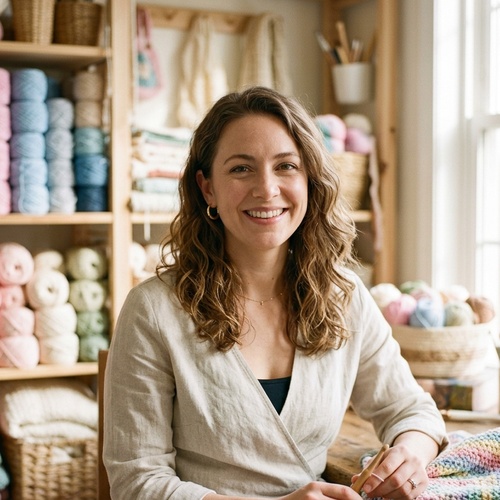
There is a distinct, grounding comfort that comes from wrapping yourself in a heavy, handmade blanket (compare with our nursery-sized easy baby blanket and geometric C2C tile throw). While delicate heirloom quilts have their place, modern home living calls for substantial texture—a throw with enough physical weight to soothe tired shoulders, deep textural ridges that catch the morning light, and a plush squish that invites you to curl up with a hot mug of coffee. In this comprehensive pattern guide, we share our favorite chunky ribbed crochet blanket pattern. Designed with thick wool-blend yarn and an oversized ergonomic hook, this piece works up in just a few cozy evenings while creating the luxurious, structured drape of an upscale designer knit.
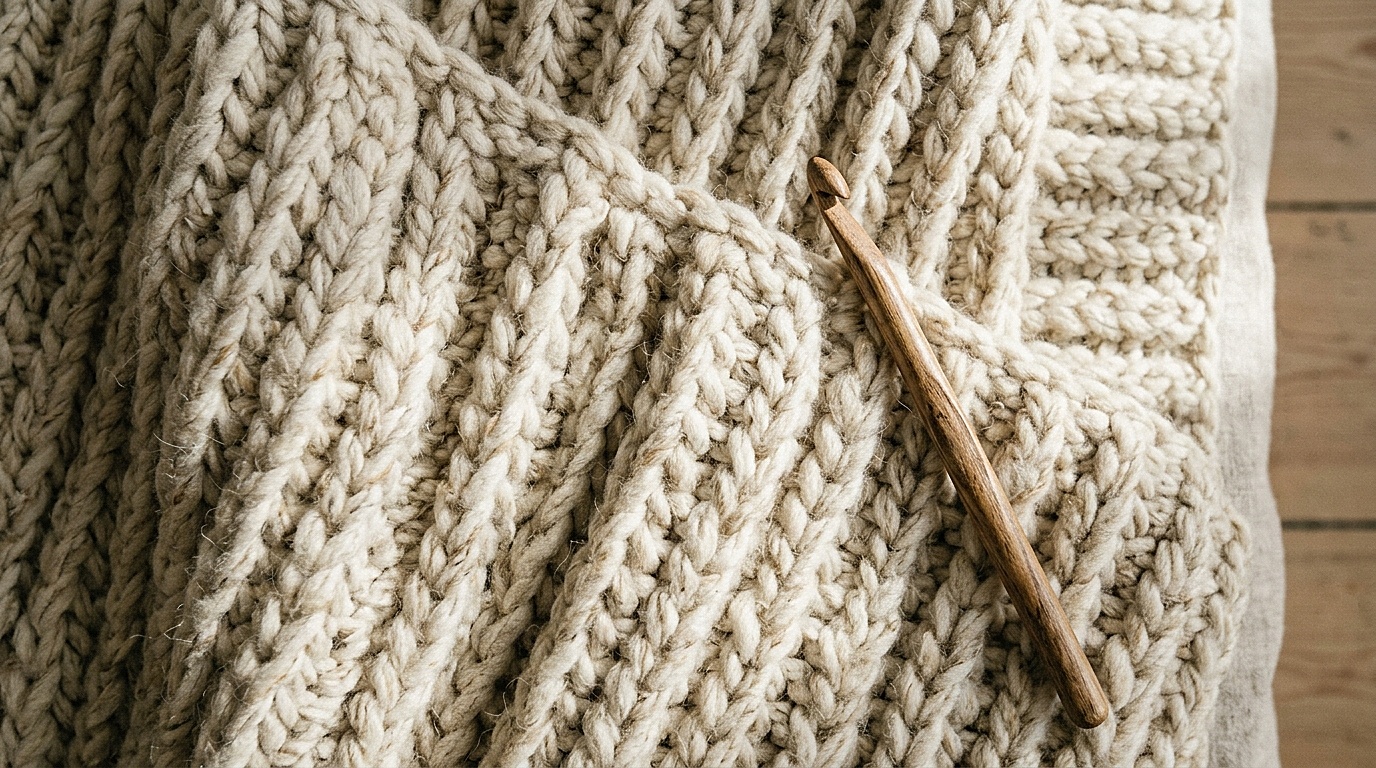
Many makers assume that deep dimensional ribbing can only be achieved with knitting needles. By choosing the right super bulky yarn (see our curated guide to the best yarns for crochet blankets), this crochet throw works up in just 4 to 6 hours. But standard knitted throws in bulky yarn have a notorious downside: they tend to stretch excessively lengthwise under their own weight, losing their crisp square proportions over time. By working half-double crochets (hdc) exclusively through the third loop (the horizontal bar behind the top loops), we lock the structural height of each row while pushing the classic “V” braids forward onto the surface of the fabric. The result is a substantial, squishy accordion rib that flexes comfortably across your lap without stretching out of shape.
Blanket Sizing & Chunky Yardage Requirements
Because super bulky yarn works up with fewer stitches per inch, accurate yardage planning is essential (consult our crochet yarn weight and hook size guide for metric conversions). Below are the standard bed and living room throw dimensions along with realistic skein estimates:
| Blanket Style | Finished Dimensions | Starting Chain | Skeins Needed (Super Bulky #6, ~106 yds/skein) |
|---|---|---|---|
| Lapghan / Reading Throw | 36″ x 48″ (91 x 122 cm) | Chain 52 (51 sts) | approx. 7 skeins (~740 yards) |
| Living Room Throw (Featured) | 50″ x 60″ (127 x 152 cm) | Chain 72 (71 sts) | approx. 12 skeins (~1,250 yards) |
| Twin Bed Spread | 60″ x 80″ (152 x 203 cm) | Chain 86 (85 sts) | approx. 18 skeins (~1,900 yards) |
| Queen Bed Runner | 66″ x 90″ (168 x 229 cm) | Chain 95 (94 sts) | approx. 22 skeins (~2,300 yards) |
Stitch Mechanics: The Third-Loop Foundation Rhythm
The secret behind this throw’s crisp knit-look ridges is the anatomy of the half-double crochet stitch. A standard single or double crochet has only two top loops (the front loop and back loop). A half-double crochet, because of its initial yarn-over, creates a unique third loop:
- Locating the Third Loop: When looking at the front of your work, tilt the top edge slightly toward you. Directly beneath the back loop sits a parallel horizontal strand of yarn. This is the third loop.
- The Forward Braid Effect: Inserting your hook exclusively under this third horizontal bar leaves the standard top “V” completely unworked. As you finish the stitch, that unworked “V” is pushed forward at a 90-degree angle, forming a pronounced raised braid along the right side of the fabric.
- Reversible Ribbing: Because you turn your work at the end of each row, every second row pushes a braid to the opposite side, creating a fully reversible, plush accordion rib.

Tools, Hook Calibration & Tension
- Yarn: Category #6 Super Bulky yarn (such as Lion Brand Wool-Ease Thick & Quick). A 20% wool / 80% acrylic blend delivers natural thermal insulation with durable machine washability.
- Hook: 10.0mm (US N/P-15) or 12.0mm hook. Important: If you crochet tightly, bump up to a 12.0mm hook. Bulky yarn worked with too small a hook becomes stiff like a welcome mat rather than a soft, pliable throw.
- Notions: Large eye blunt yarn needle, scissors, 2 locking stitch markers.
- Gauge: 7 hdc stitches and 5.5 rows = 4″ (10 cm) in third-loop ribbing.
Step-by-Step Executable Pattern (50″ x 60″ Living Room Throw)
Abbreviations (US Terms): ch = chain; hdc = half double crochet; st(s) = stitch(es).
Foundation Chain: Loosely chain 72 with your 10.0mm hook. (If your chain tends to be tight, work the chain with an 11.5mm or 12.0mm hook, then switch down to the 10.0mm hook for the rows. This prevents the bottom edge from pulling inward).
Row 1 (Foundation Base): Work 1 hdc into the 2nd chain from your hook, and in each chain across to the end. Turn. [71 active hdc stitches]

Row 2 (Establishing Ribbing): Ch 1 (does NOT count as a stitch here and throughout; do not skip the first stitch). Working strictly into the third loop of each stitch: work 1 hdc into the third loop of the very first stitch, and into the third loop of each stitch across. Be sure to catch the third loop of the final stitch at the edge. Turn. [71 active hdc stitches]
Rows 3 through 82: Repeat Row 2 until your blanket reaches approximately 60 inches in length (or your desired throw length). Count your stitches every 10 rows to verify that you still have exactly 71 stitches. Fasten off and weave in all yarn ends.
Preventing Edge Flaring & Dropped End Stitches
Because chunky third-loop ribbing has vertical give, beginners often encounter wavy or trapezoid-shaped edges. Keep your borders perfectly vertical with these two checkpoints:
- Catching the Tilted Final Stitch: The final stitch of every row tends to roll backward toward the wrong side. If you miss its third loop, your blanket will gradually taper inward by 1 stitch every few rows. Place a locking stitch marker in the first and last stitch of the row until you train your eye to spot the edge loop automatically.
- Keep the Turning Chain Short: Using a Ch 2 turning chain on half-double crochet creates large, loose loops along the edges that flare outward under blanket weight. Using a tight Ch 1 and working directly into the first stitch eliminates gaps and keeps margins crisp and straight.

Seamless Joins in Thick Gauge (Avoiding Bulky Knots)
Tying a traditional square knot in super bulky yarn produces a hard, marble-sized lump that will poke through the fabric and feel uncomfortable when resting against your back. Instead, use the Split-Strand Weave Join: unravel the last 4 inches of both the old and new yarn tails into their individual ply strands. Trim half the plies from each tail, then twist the remaining halves together with your fingers. Crochet through the join as normal. The resulting join has the exact same thickness as a single yarn strand, making it completely invisible.
Laundering & Care Protocols for Heavy Chunky Throws
A finished 50″ x 60″ throw weighs approximately 3 to 4 pounds. When wet, that weight triples. To preserve the stitch definition and prevent permanent distortion:
- Wash on Gentle in a Front-Load Machine: Avoid top-load washing machines with center agitators, which can pull and snag thick yarn loops. Wash in cold water on the wool or delicate cycle.
- Dry Flat, Never Hang: Never hang a wet chunky blanket over a clothesline, as the immense water weight will stretch the rows permanently. Tumble dry on low heat for 15 minutes to remove excess moisture, then spread flat across dry towels to finish air-drying.
Save This Chunky Blanket Pattern on Pinterest
Pin this chunky ribbed throw pattern to your Pinterest crochet home decor board so you have the bed sizing chart and yardage requirements ready for your next cozy weekend project!

